
Explore
Intelligence
Difficulty & Readiness Guide
Is Hatu Peak Trek Difficult? — Fitness & Altitude Guide
An easy-to-moderate half-day hike. The gradual slope and wide trails make it perfect for families, though winter snow adds a thrilling layer of challenge.
The Question
Can I do this trek?
Preparation Required
Intermediate
Prior Experience
Recommended: 1-2 easy Himalayan treks or regular hiking experience.
Expert Verdict
Highly technical trek requiring physical and mental preparation.
Route Knowledge
Why is it difficult?
Exertion Index
Primary Challenge
Route Identity
Fast-paced or high-mileage route demanding excellent cardiovascular fitness.
Primary Drivers
- Maximum sleeping altitude of 11,152 ft
- Grueling summit push with 2,152 ft of elevation gain
- Peak daily distance of 14 km
View Full Route Analysis
Physiological Demand
Expect long, exhausting days of sustained climbing at high intensity. Your cardiovascular system will be pushed to its absolute limit.
Below the major effects of altitude sickness. Air remains relatively dense.
Comfortable pacing with good recovery options.
Terrain Breakdown
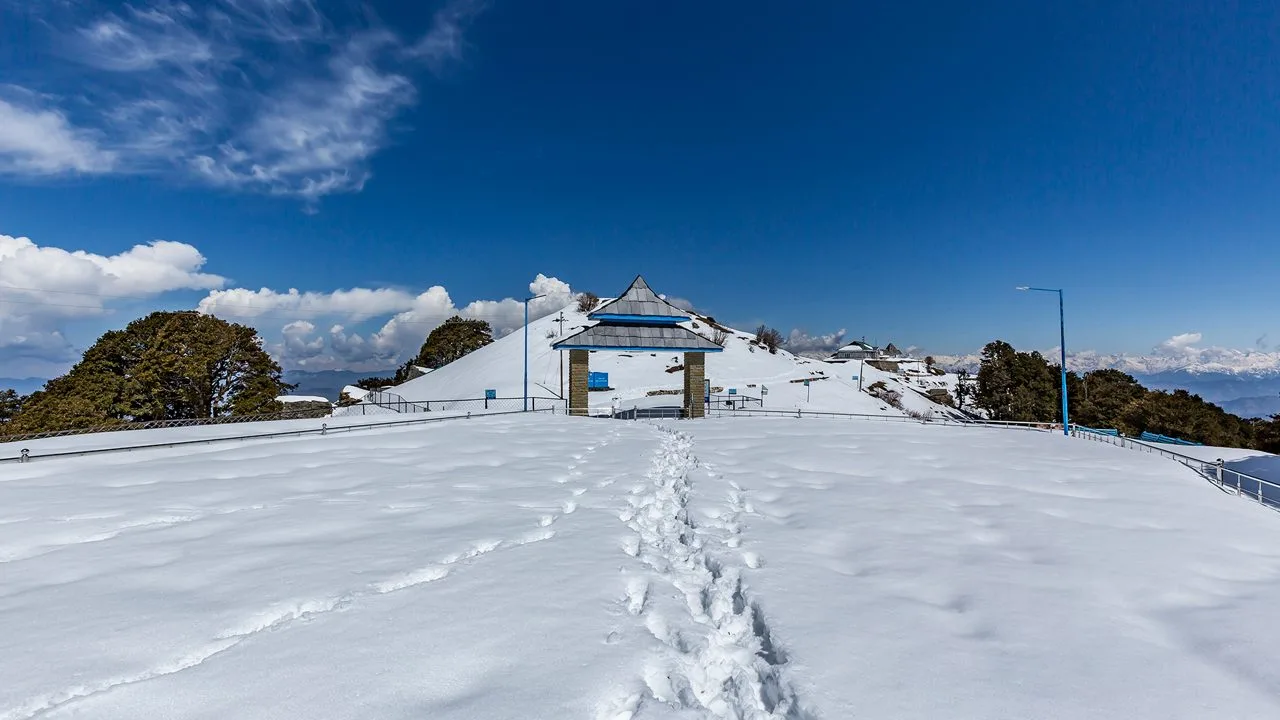
The trail is a mix of a narrow paved road and steep forest shortcuts. In winter, the entire route is blanketed in snow, and the shortcuts become challenging ice chutes.
Summit Day Notes
The ascent is steady and gradual. The final 1 km leading up to the temple is the steepest part.
The Descent
The descent is fast. If there is hard ice in Jan/Feb, microspikes or a walking stick are critical to prevent slipping.
Altitude Profile
A very safe profile. Reaching 11,152 ft for an hour and descending back to 9,000 ft minimizes any serious AMS risks.
Run AMS Risk Audit →Trail Performance Data
Max Gradient
20%
Hydration
0.4L per km recommended
Loose Surface Sections
- •The steep forest shortcuts
Personal Readiness
Am I ready?
What this route demands
People who feel comfortable on this route can usually:
Who Can Do This Trek?
Min Age
8+
Max Age
65
Western Toilets at Base
Yes
Solo Female Travelers
Very safe. The trail is popular and frequently used by tourists and locals alike.
Hazard Profile
What goes wrong?
Common Mistakes on Hatu Peak Trek
Most injuries and failures on this trail can be avoided by making smarter decisions early on.
Wearing smooth-soled sneakers in winter, leading to constant slipping.
Not carrying water. There are no natural water sources on the ascent.
Underestimating the cold at the summit, where wind chill is significant.
Safety & Medical Risks
Key Risks
Slipping on black ice or hard-packed snow on the descent in winter
Getting stuck on the road if attempting to drive up in winter
Hypothermia if not properly dressed for winter summit winds
AMS (Altitude Sickness)
Very low risk. Stay hydrated and ascend slowly.
Evacuation Route
Evacuation is very straightforward. The trail is wide (it is a road in summer). You can quickly descend to Narkanda on foot or request an emergency 4x4 if the road is clear of snow.
Solo Trekking
Safe for solo trekking in summer as the trail is busy. In deep winter, it is safer to trek with a partner or guide due to slipping hazards.
Common Trail Ailments
🏥 Nearest ICU: Shimla (IGMC, 2.5 hours away)
Tactical Emergency Hub
> The trail's proximity to Narkanda and the presence of a motorable road makes emergency access extremely fast compared to wilderness treks.
Auditability
How is this calculated?
Before attempting this route:
Still deciding?
Compare routes side-by-side to find the perfect match for your fitness, dates, and budget.
Still think it's doable? Share this with your trek mate and see if they agree.
Step 2: Seasonal Safety
You know how demanding this route is.
Now find the safest and most reliable season to attempt it.
Check Best Time to Go