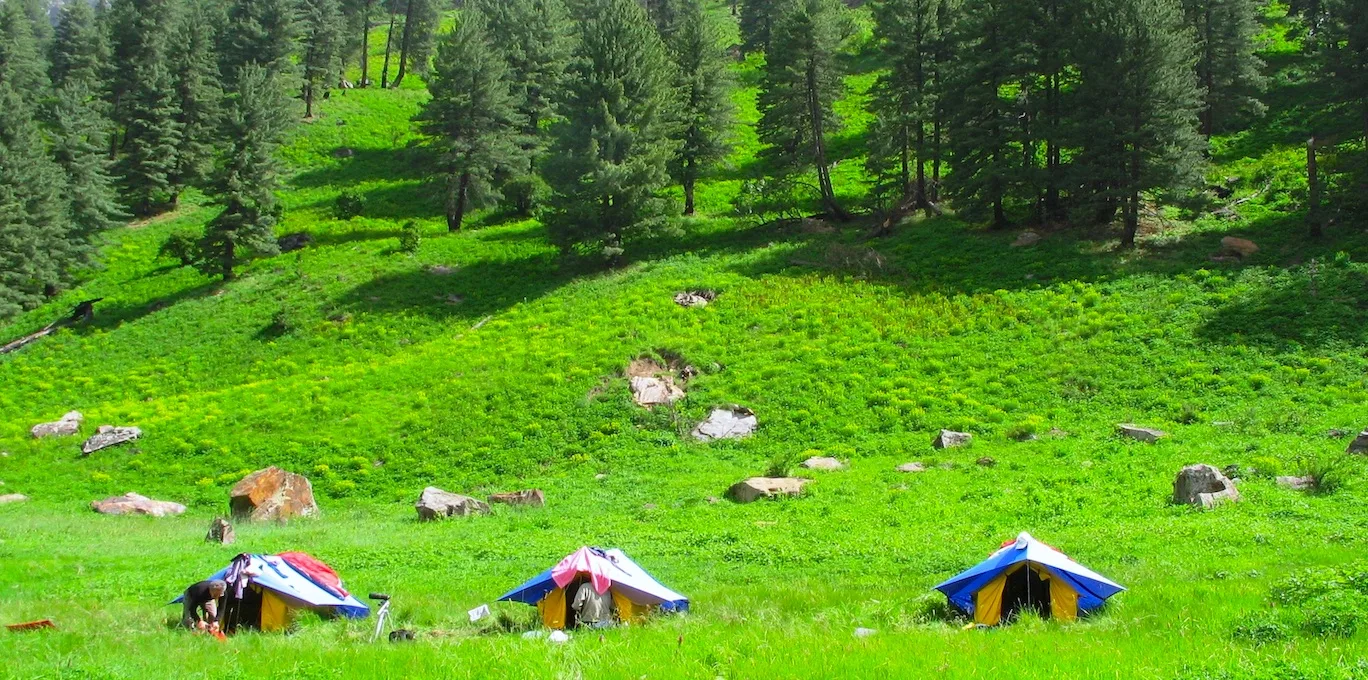
We are currently vetting local partners for Gara Gushaini Trail to ensure the highest safety standards. Be the first to know when it's open for booking.
Are you a local operator?
Join our platform to list your verified packages for Gara Gushaini Trail and reach thousands of trekkers directly.
The Gara Gushaini Trail is a heritage walk connecting the ancient markets of Gara village to the trekking hub of Gushaini through the forested Tirthan Valley riverside — a 2-day easy trail perfect for families, photography enthusiasts, and anyone entering or leaving the Great Himalayan National Park Tirthan zone. The trail passes ancient watermills, traditional stone bridges, and thick riverside forests with abundant birdlife. An accessible and culturally rich experience that complements any GHNP trek.
Trek Highlights
The Ancient Walnut Avenue near Bathad
150-year-old walnut trees creating a golden canopy over the trail in October — one of the most photographed heritage trail sections in the Tirthan valley.
Traditional Water Mill at Gara
A fully-functional traditional Himachali gharat (water mill) using a wooden flume to divert river water onto the wheel — unchanged in design for centuries.
Everyone visiting the Tirthan valley for the first time. This is the orientation walk — understanding the valley's geography, villages, river, and forest before tackling any higher or more technical trails.
How long does the walk take?
18 km at a leisurely cultural pace with photography and village stops takes approximately 7-8 hours. Split across 2 days with a village overnight, it becomes a wonderful immersion.
Can I stay in a village homestay along the route?
Yes — several villages between Gara and Gushaini have basic homestay arrangements. Bathad village midway is a popular overnight stop with a small community homestay.
What are the traditional water mills I'll see?
Gharat or chakki — traditional Himachali water mills driven by river diverted into wooden flumes. Several are still in active use on this trail, grinding wheat and maize.
Is there any uphill?
Minor undulations following the river valley contours. No sustained uphill sections. Maximum elevation gain is 200-300 ft in any one section.
Are there any vehicle roads crossing the trail?
Yes. The trail crosses the valley road 2-3 times between Gara and Gushaini. The motorable road was built in the 1980s and is parallel to the old foot-path in sections.
Can I do this in reverse (Gushaini to Gara)?
Yes. Both directions are equally valid. Many trekkers walk Gushaini to Gara and take a taxi back, making it a simple one-way walk.
What traditional fruits grow along the trail?
Walnut, plum, pear, apple (in season), and wild pomegranate. Walnut trees are particularly spectacular — ancient, enormous, overhanging the trail near villages.
Is there wildlife along the valley floor?
River birds are outstanding — Ibisbill, Common Kingfisher, Plumbeous Water Redstart, White-capped Dipper all documented on the Tirthan near this trail. Barking Deer in forested sections.
Is this suitable for non-trekkers or elderly visitors?
Yes — this is one of the most accessible valley walks in Himachal Pradesh. No fitness requirement beyond normal walking ability.
Who should do the Gara-Gushaini trail?
Everyone visiting the Tirthan valley for the first time. This is the orientation walk — understanding the valley's geography, villages, river, and forest before tackling any higher or more technical trails.
How long does the walk take?
18 km at a leisurely cultural pace with photography and village stops takes approximately 7-8 hours. Split across 2 days with a village overnight, it becomes a wonderful immersion.
Can I stay in a village homestay along the route?
Yes — several villages between Gara and Gushaini have basic homestay arrangements. Bathad village midway is a popular overnight stop with a small community homestay.
What are the traditional water mills I'll see?
Gharat or chakki — traditional Himachali water mills driven by river diverted into wooden flumes. Several are still in active use on this trail, grinding wheat and maize.
Is there any uphill?
Minor undulations following the river valley contours. No sustained uphill sections. Maximum elevation gain is 200-300 ft in any one section.
Are there any vehicle roads crossing the trail?
Yes. The trail crosses the valley road 2-3 times between Gara and Gushaini. The motorable road was built in the 1980s and is parallel to the old foot-path in sections.
Can I do this in reverse (Gushaini to Gara)?
Yes. Both directions are equally valid. Many trekkers walk Gushaini to Gara and take a taxi back, making it a simple one-way walk.
What traditional fruits grow along the trail?
Walnut, plum, pear, apple (in season), and wild pomegranate. Walnut trees are particularly spectacular — ancient, enormous, overhanging the trail near villages.
Is there wildlife along the valley floor?
River birds are outstanding — Ibisbill, Common Kingfisher, Plumbeous Water Redstart, White-capped Dipper all documented on the Tirthan near this trail. Barking Deer in forested sections.
Is this suitable for non-trekkers or elderly visitors?
Yes — this is one of the most accessible valley walks in Himachal Pradesh. No fitness requirement beyond normal walking ability.
Are you a local operator?
Join our platform to list your verified packages for this trek.