
Explore
Intelligence
Season & Weather Guide
Best Time for Bhrigu Lake Trek — Month-by-Month Guide
June to July gives Bhrigu Lake Trek a surreal half-frozen lake; October brings sharp Pir Panjal peak views overhead.
Seasonal Verdict
When should you go?
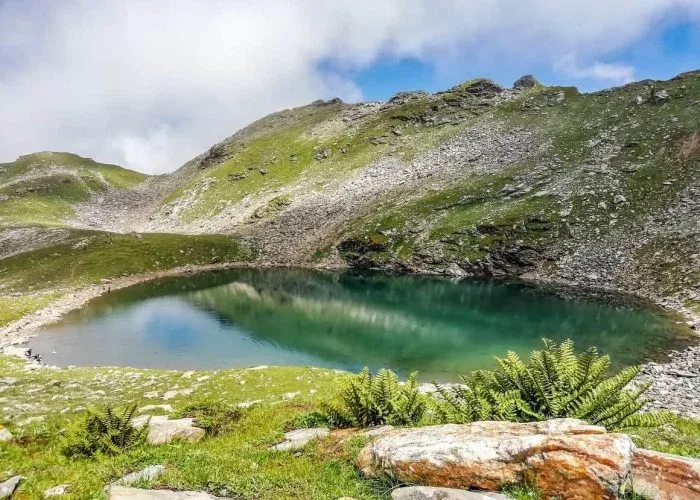
Bhrigu Lake is famous for its high-altitude alpine meadows that rival those in Kashmir and its namesake glacial lake, which changes colors throughout the season. It is a classic summer trek. Early summer (June) offers the thrill of walking on snow and seeing a frozen lake, while late summer (July-Sept) reveals the vibrant green meadows.
Season at a Glance
Editor's Notes
May to June is best for snow trekking, while July to September offers lush green meadows.
October provides stable weather and panoramic views before the trek closes for winter.
Month by Month
What each month looks like
January
Conditions
Deep winter. The high meadows are completely inaccessible due to heavy snow.
Crowds
none
Extreme winter freeze and deep snow.
Closed. Extreme winter conditions.
February
Conditions
Deep winter. The high meadows are completely inaccessible due to heavy snow.
Crowds
none
Extreme winter freeze and deep snow.
Closed. Extreme winter conditions.
March
Conditions
Deep snow cover remains. The steep ascent is highly prone to avalanches.
Crowds
none
High avalanche risk and deep snow.
Early season. Deep snow accumulations.
April
Conditions
Spring melt begins, but the steep trail is dangerous and slippery with rotting snow.
Crowds
none
Unstable snow conditions.
Early season. Deep snow accumulations.
May
Conditions
The trail begins to open late in the month. Significant snow trekking is required.
Crowds
low
Deep unstable snow on steep ascents.
Prime pre-monsoon window. Good snow stability.
June
Peak SeasonConditions
The prime snow-trekking window. The meadows are carpeted in snow and the lake is mostly frozen.
Crowds
high
Prime pre-monsoon window. Good snow stability.
July
Peak SeasonConditions
The snow melts to reveal endless, lush green meadows. Wildflowers bloom. Monsoon clouds begin to build.
Crowds
high
Monsoon danger. Landslides and severe rains.
August
Peak SeasonConditions
Monsoon affects the Manali region. Trails can be muddy, but the meadows are at their absolute greenest.
Crowds
medium
Monsoon danger. Landslides and severe rains.
September
Peak SeasonConditions
The rains clear, offering crisp blue skies and stunning views of the Pir Panjal and Dhauladhar ranges.
Crowds
high
Crystal clear skies. Best visibility of the year.
October
Peak SeasonConditions
Autumn arrives. The meadows turn golden. Very cold winds sweep the exposed ridges.
Crowds
medium
Crystal clear skies. Best visibility of the year.
November
Conditions
Winter starts. The high meadows are blasted by freezing winds and early snow.
Crowds
none
Extreme cold and early winter storms.
Winter setting in. Sub-zero temperatures rapid.
December
Conditions
Deep winter. The high meadows are completely inaccessible due to heavy snow.
Crowds
none
Extreme winter freeze and deep snow.
Closed. Extreme winter conditions.
Plan Your Trek:
Still deciding?
Compare routes side-by-side to find the perfect match for your fitness, dates, and budget.
Timing makes or breaks a trek. Send this to your group before you decide.
Step 3: Route Intelligence
You've chosen a season.
Now see exactly how the route unfolds day by day, including terrain types and daily altitude profiles.
Explore the Itinerary