
Explore
Intelligence
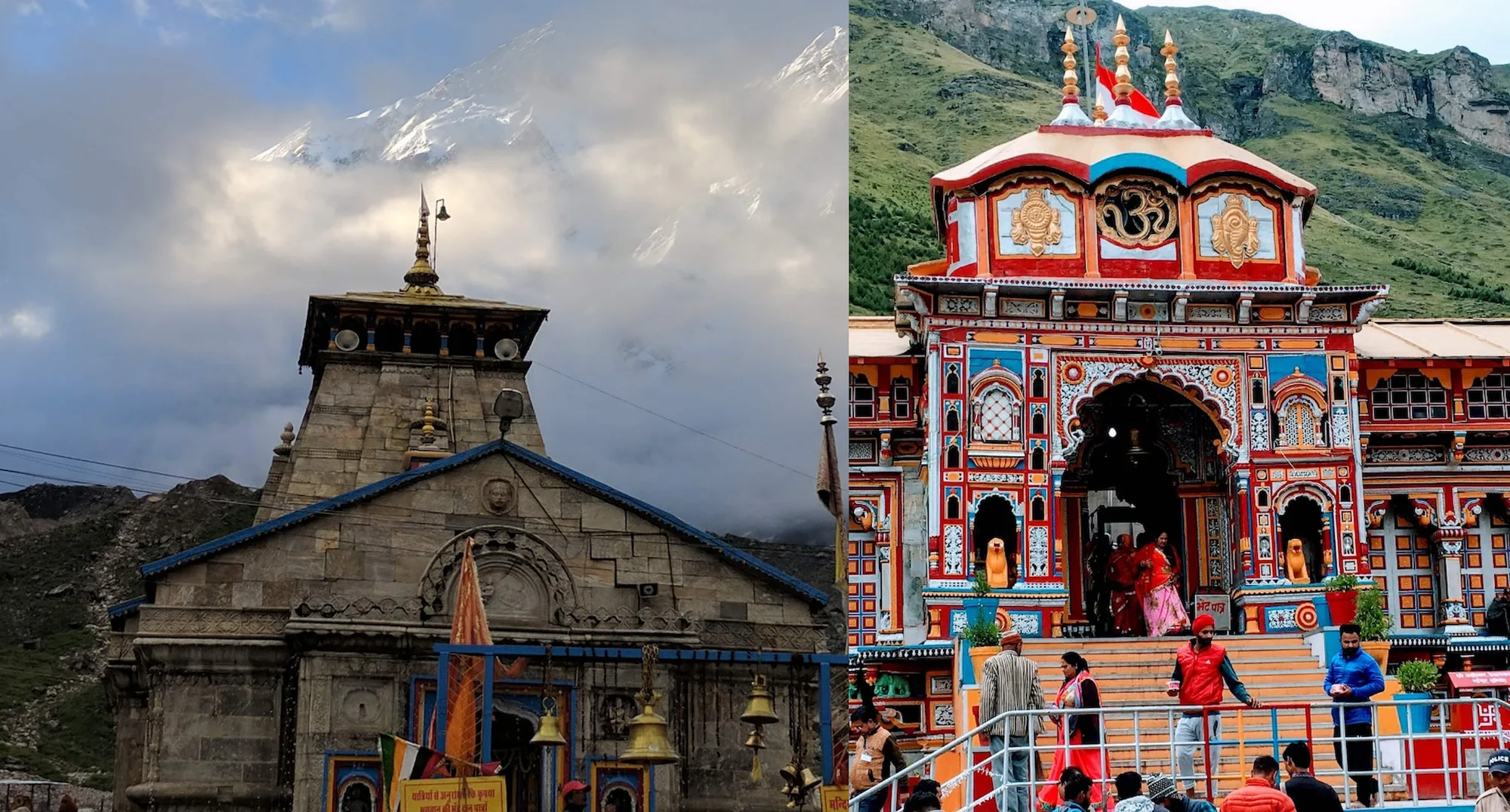
The Complete Guide to
Do Dham (Badrinath - Kedarnath).
Duration
6 Days
Region
Uttarakhand
Difficulty
moderate
Altitude
11,755 Ft
The Preparation Sequence
Begin your preparations.
Most pilgrims underestimate how early the journey truly begins. This is the sequence that works.
Complete Registration
Register on the official government portal. Biometric details and valid ID required.
Arrange Accommodation
Dharamshalas and hotels near temple towns fill quickly during pilgrimage season.
Medical Preparation
Mandatory medical clearance if you are 60+. Begin acclimatisation walks if possible.
Arrange Your Essentials
Layered clothing, prescribed medicines, offline maps, photocopies of all documents.
Confirm Everything
Print registration receipts and bookings. Share your itinerary with family at home.
“Preparation is part of the pilgrimage.”
Detailed Guidance
Plan every stage.
Best Time for Darshan
Temple opening dates, seasonal weather, and month-by-month breakdown.
The Sacred Path
Day-by-day itinerary from base camp to main shrine with all halt points.
Darshan Information
Temple timings, VIP darshan, ritual availability, spiritual decorum.
Packages & Costs
Economy to Premium tier comparison with transparent inclusions breakdown.
Government Requirement
Registration & Required Documents
Mandatory pilgrimage registration enforced by the Uttarakhand government.
Official Checklist
Carry originals + photocopies of each.
- Aadhaar card (preferred) or any government-issued photo ID
- Passport-size photograph (1–2 copies)
- Medical fitness certificate (mandatory for pilgrims above 60; strongly recommended for those with cardiac, respiratory, or hypertensive conditions)
- Char Dham Yatra E-Pass (Uttarakhand Tourist Care Portal)
- Green Card / Trip Card for commercial vehicles
- Biometric verification using valid government ID (Aadhar) is mandatory at base camps like Sonprayag.
- Medical fitness checks may be required for senior citizens before the Kedarnath trek.
- Helicopter luggage is strictly limited to 5kg per passenger.
Intelligence Brief
What first-timers underestimate
Traffic near temple towns can add 4–6 hours to your journey. Allow for this generously.
Fatigue accumulates over multiple days. Plan at least one full rest day between major shrines.
Weather above 3,000m changes without warning. Carry full rain protection even in summer.
Mobile network is unavailable beyond Barkot and Guptkashi. Download everything before you leave.
Darshan queues during peak season can run 2–8 hours. Patience is part of the pilgrimage.
ATMs are often non-functional in remote temple towns. Carry sufficient cash from the plains.
“Every temple has its own rhythm. Allow enough time.”
What to Carry
Essentials to carry.
Carry what you need, and nothing more. The journey itself will teach you what matters.
Pack these first
These items will make the biggest difference for your pilgrimage.
trekking poles
Trekking poles will significantly reduce knee fatigue on the long stone descents.
zipped trousers
The steep, crowded trail means you will get jostled, and phones frequently fall out of open pockets onto the stone path.
synthetic undergarments
The continuous ascent causes heavy sweating. Cotton retains moisture and causes severe chafing over long distances.
🧥Multi-Terrain Footwear
3 ESSENTIALS • CLIMATE-LAYERED CLOTHING
+
Multi-Terrain Footwear
3 ESSENTIALS • CLIMATE-LAYERED CLOTHING
☔Cold & Rain Guard
4 ESSENTIALS • ESSENTIAL FOR UNPREDICTABLE WEATHER
+
Cold & Rain Guard
4 ESSENTIALS • ESSENTIAL FOR UNPREDICTABLE WEATHER
🔋Logistics & Tech
4 ESSENTIALS • REMOTE CHARGING ESSENTIALS
+
Logistics & Tech
4 ESSENTIALS • REMOTE CHARGING ESSENTIALS
Guidance for Your Journey
This guidance is for you.
Senior Citizens (60+)
Medical clearance mandatory. Choose helicopter options for high shrines. Pace matters more than speed.
Families with Children
Pre-book child-friendly accommodation. Keep children hydrated. Avoid extreme altitude stops without acclimatisation.
Solo Pilgrims
Register emergency contact on portal. Join operator-led groups for safety. Download offline maps before leaving.
Budget Travellers
Shared taxis reduce cost significantly. Government dharamshalas available at all major shrines. Cook your own meals where possible.
Many first-time pilgrims spend months arranging hotels but forget that the real journey begins long before they leave home. Pack less than you think you’ll need. Arrive without expectations. The temples have been receiving pilgrims for centuries — they are patient.
MountRoutes Editorial Team
Knowledge Base
Questions Answered
Expert guidance on the most common uncertainties.
Planning
Can I complete the Badri-Kedar Yatra in just 5 days?+
A 5-day itinerary is possible but very hectic. It involves Day 1 Haridwar to Guptkashi, Day 2 Kedarnath Darshan, Day 3 drive to Badrinath, Day 4 Badrinath Darshan, and Day 5 return. We recommend 6 days for a safer and more spiritual pace.
Which is more physically challenging: Kedarnath or Badrinath?+
Kedarnath is the challenge. It requires a grueling 16-22km trek (one way). Badrinath is accessible directly by road, making it much more comfortable for those with limited mobility.
Is combined registration needed for a Do Dham trip?+
Yes, when registering on the government portal, you must select both Kedarnath and Badrinath as your destinations. This generates a single QR code valid for both temple checkpoints.
What is the mobile network connectivity like at the shrines?+
Badrinath has decent 4G (Jio/Airtel). Kedarnath has connectivity near the temple, but signals drop significantly during the trek. BSNL/Jio generally provide the most stable network in these high-altitude zones.
Are there ATM facilities available at these heights?+
There are ATMs in Badrinath and Guptkashi/Sonprayag, but they often run out of cash during peak season. We strongly advise carrying sufficient physical cash for local expenses, ponies, and small shops.
What happens if someone gets sick at Kedarnath?+
There is a 24/7 medical post at the Kedarnath base and several 'health ATMs' along the trek. For serious cases, emergency heli-evacuation can be arranged at the pilgrim's expense.
Can I visit Badrinath first and then Kedarnath?+
While the traditional order is Kedar-Badri, you can technically visit them in any order. However, visiting Kedarnath first is preferred as it's the more strenuous part of the journey.
Is it safe to drive to Badrinath during the Monsoon (July-August)?+
Monsoons bring risks of landslides on the Badrinath highway. Travel is allowed, but you must keep a flexible schedule as roads can be blocked for several hours during heavy rains.
Transport
How reliable is the helicopter service for Kedarnath?+
Helicopters are highly dependent on weather. Flights from Phata, Sirsi, and Guptkashi can be delayed or cancelled during fog or rain. Always keep one buffer day in your itinerary for such situations.
Temple
Is priority darshan available for Kedarnath and Badrinath?+
Yes, 'Special Darshan' tickets can be purchased at the counter or via the BKTC (Badrinath Kedarnath Temple Committee) website to avoid the 8–10 hour wait time during peak season.
Before You Leave
One last review.
Tick off each item before you depart. A calm departure is the best beginning.
Document Status
0/6
Verified Items
Prepare before you leave
Practice stairs
The Kedarnath trail involves a long stone ascent that repeatedly loads your legs.
Climb stairs for 15–20 minutes twice a week before your journey.
Wear your journey footwear
Continuous hard stone surfaces dramatically increase the risk of hot spots and blisters.
Wear the shoes you plan to use on the pilgrimage during several walks before you leave.
Walk with your daypack
You will carry your daypack continuously during the massive ascent.
Do at least one longer walk carrying the backpack filled with the items you intend to take.
Planning Complete
Ready to plan your pilgrimage?
Compare OperatorsEverything your family needs to know before the journey.
Planning Do Dham (Badrinath - Kedarnath)?
Get route conditions, operator updates, and season windows before booking.
Don't miss out! Follow us for route updates@mountroutes|LinkedIn
No spam. Only useful yatra updates.