
Explore
Intelligence
Essential Planning Guide
Zingchen Rumbak Trek — Complete Guide (2026)
Vibe & Scenery
The Experience
Introduction
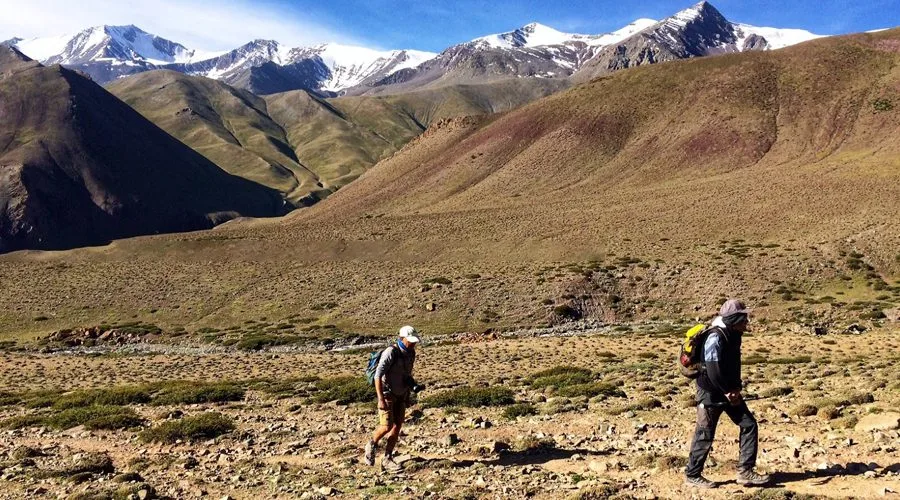
Unlike traditional Himalayan treks focused on reaching a summit or mountain pass, the Zingchen–Rumbak Trek is built around wildlife observation. After a short approach into the Rumbak Valley, trekkers establish a base from which daily excursions are made with experienced local trackers.
During winter, the valley becomes one of the best places on Earth to observe the elusive snow leopard. Blue sheep, ibex, Himalayan wolves, golden eagles, and numerous high-altitude birds are also regularly seen within Hemis National Park.
Cold temperatures, high altitude, and patient observation define this experience far more than long trekking distances, making it ideal for wildlife photographers and nature enthusiasts.
Quick Facts
Duration
Max Altitude
Difficulty
Best Time
Trek Distance
Trail Atmosphere
Stargazing
Class 1 Dark Sky
Scent Profile
Silence Level
~15 dB
Vertigo Factor
2 / 10
Iconic Spots
Rumbak Valley
Husing Ridge
Zingchen Gorge
Environment
Nature & Culture
Flora & Fauna
Flora
Fauna
The snow leopard is deeply revered in Tibetan Buddhism, often associated with local mountain deities and considered a protector of the high passes.
— Local folklore
Spiritual & Cultural Significance
The locals view the wildlife as part of a sacred ecosystem, deeply influenced by Buddhist principles of non-violence.
🕐 Shrine Timings: N/A
Temple Protocols
Festivals & Dates
Technical Details
Challenge & Preparation
Primarily a cardio demand challenge
A welcoming route that balances cardio demand and altitude exposure.
Personal Readiness
Am I ready?
Planning
Logistics & Trail Intel
Getting There
Route to Base
In winter, the roads to Ladakh are completely closed
You MUST fly into Leh (Kushok Bakula Rimpochee Airport)
From Leh, Zingchen is a 1-hour drive
Base Village
Leh / Zingchen
11,500 ft
Last ATM
Leh
Nearest Medical Facility
Sonam Norboo Memorial Hospital, Leh (Excellent high-altitude facility).
Mobile Signal
None in Rumbak.
Water Sources
All water is boiled from ice/snow or flowing glacial streams by the camp staff. You must use thermos flasks, as plastic bottles will freeze solid.
Charging
Premium camps provide limited solar/generator charging in the evening. Homestays have sporadic solar power.
For Drivers
Road Condition
The drive from Leh to Zingchen is short but the final stretch is a bumpy dirt track.
Leh
Trail Culinary & Diet
Don't miss the Thukpa (Hot noodle soup, perfect for winter)
Buy specialized diet items at Leh
The Content & Remote Hub
No DronesStrictly prohibited in Hemis National Park to avoid disturbing the highly sensitive and endangered wildlife.Top Vlog Spots
Video Calls
none
Est. 0 Mbps
UPI Reliability
1/10
Permits and Regulations
An Inner Line Permit (ILP) and a Hemis National Park Wildlife Permit are mandatory. A specific wildlife photography fee may also be levied by the wildlife department.
Learn more about how we vet operators and ensure transparency on our why MountRoutes page.
Packing List
Core Extreme Cold Clothing
- Expedition-grade Down Jacket (rated to -30°C)
- Heavyweight Merino wool base layers (top and bottom, x3)
- Fleece mid-layers (x2)
- Insulated, waterproof mountaineering or snow pants
Footwear & Protection
- Heavily insulated, waterproof winter trekking boots
- Thick expedition wool socks (x5 pairs)
- Microspikes (essential for frozen river crossings and icy trails)
- High-altitude insulated gaiters
Head & Hands
- Windproof balaclava and heavy fleece beanie
- Category 4 polarized glacier glasses
- Insulated Gore-Tex mittens (with separate liner gloves)
- Chemical hand and toe warmers (MANDATORY)
Gear & Accessories
- High-quality binoculars (8x42 or 10x42 minimum)
- Telephoto camera lens (400mm to 600mm) and heavy-duty tripod
- Extra lithium batteries (kept inside your jacket to prevent freezing)
- Thermos flask for hot tea (water bladders will freeze solid)
- Personal first aid kit with Diamox
Deep Dives
Explore Further
Editor's Notes
Explore In Detail
Day by Day Itinerary
6-day route reaching 13,800ft. Covers 16.0km of varied terrain.
→ See full itinerary with altitude profileDifficulty & Fitness
Rated accessible. The walking terrain is mostly moderate—frozen stream beds, snowy paths, and rocky ridges. The real 'terrain' is the extreme cold.
→ See difficulty breakdown and fitness guideCost & Pricing
Packages range from 60,000 - 1,20,000 INR. Inclusions and hidden costs vary by operator tier.
→ See full cost breakdownFrequently Asked Questions
Are we guaranteed to see a snow leopard?
No, wildlife sightings are never guaranteed. However, by spending 4-5 days in the Rumbak valley during deep winter with expert local spotters, your chances are upwards of 70-80%.
Why is this trek done in the middle of winter?
During the summer, snow leopards retreat to extreme altitudes (above 17,000 ft) to follow their prey (blue sheep). In winter (Jan-March), the heavy snow forces the prey down into the valleys (like Rumbak), and the leopards follow them.
How cold does it actually get?
Brutally cold. Daytime temperatures hover between -5°C and -10°C, and nighttime temperatures routinely drop to -20°C or even -25°C.
Is the trekking itself difficult?
The distances are very short (usually 5-7 km per day), and the altitude is relatively stable around 13,000 ft. The difficulty lies entirely in enduring the extreme cold while sitting still for hours waiting for a sighting.
Do I sleep in a tent or a homestay?
Both options exist. Premium expeditions set up specialized winter camps with heated dining tents. Budget options utilize the fantastic, traditional Ladakhi homestays in Rumbak village, which have heated common rooms.
Why do I need to spend two days in Leh first?
Flying directly into Leh (11,500 ft) in winter is a massive shock to the body. You must spend at least 48 hours resting in Leh to acclimatize before moving higher into Hemis National Park.
Will my camera battery die in the cold?
Yes, very quickly. You must carry multiple spare batteries and keep them in an inner pocket close to your body heat. Never leave them in your external backpack.
What if I get altitude sickness or frostbite?
Because Rumbak is relatively close to Zingchen, emergency evacuation to Leh (which has an excellent hospital) can usually be done within a few hours via a combination of horse and 4x4 vehicle.
Still deciding?
Compare routes side-by-side to find the perfect match for your fitness, dates, and budget.
Everything you need to know, in one place. Someone else in your group needs to see this.
Planning Zingchen Rumbak Trek?
Get route conditions, operator updates, and season windows before booking.
Don't miss out! Follow us for route updates@mountroutes|LinkedIn
No spam. Only useful trek updates.
Ready to walk this route?
You’ve read the guide, now find the perfect local team to take you there. Compare our verified list of operators.
Compare verified operators