
Explore
Intelligence
Difficulty & Readiness Guide
Is Phugtal Monastery Trek Difficult? — Fitness & Altitude Guide
An easy-to-moderate trek. The primary challenges are the high altitude (12,300 ft), the intense sun, and a few narrow cliffside sections, but the distance is very manageable.
The Question
Can I do this trek?
Preparation Required
Entry Level
Prior Experience
None required. Suitable for first-time trekkers.
Expert Verdict
Highly technical trek requiring physical and mental preparation.
Route Knowledge
Why is it difficult?
Exertion Index
Primary Challenge
Route Identity
Fast-paced or high-mileage route demanding excellent cardiovascular fitness.
Primary Drivers
- Maximum sleeping altitude of 12,300 ft
- Peak daily distance of 14 km
View Full Route Analysis
Physiological Demand
Challenging daily distances and steady climbs. Good cardiovascular fitness is required.
Below the major effects of altitude sickness. Air remains relatively dense.
Comfortable pacing with good recovery options.
Terrain Breakdown
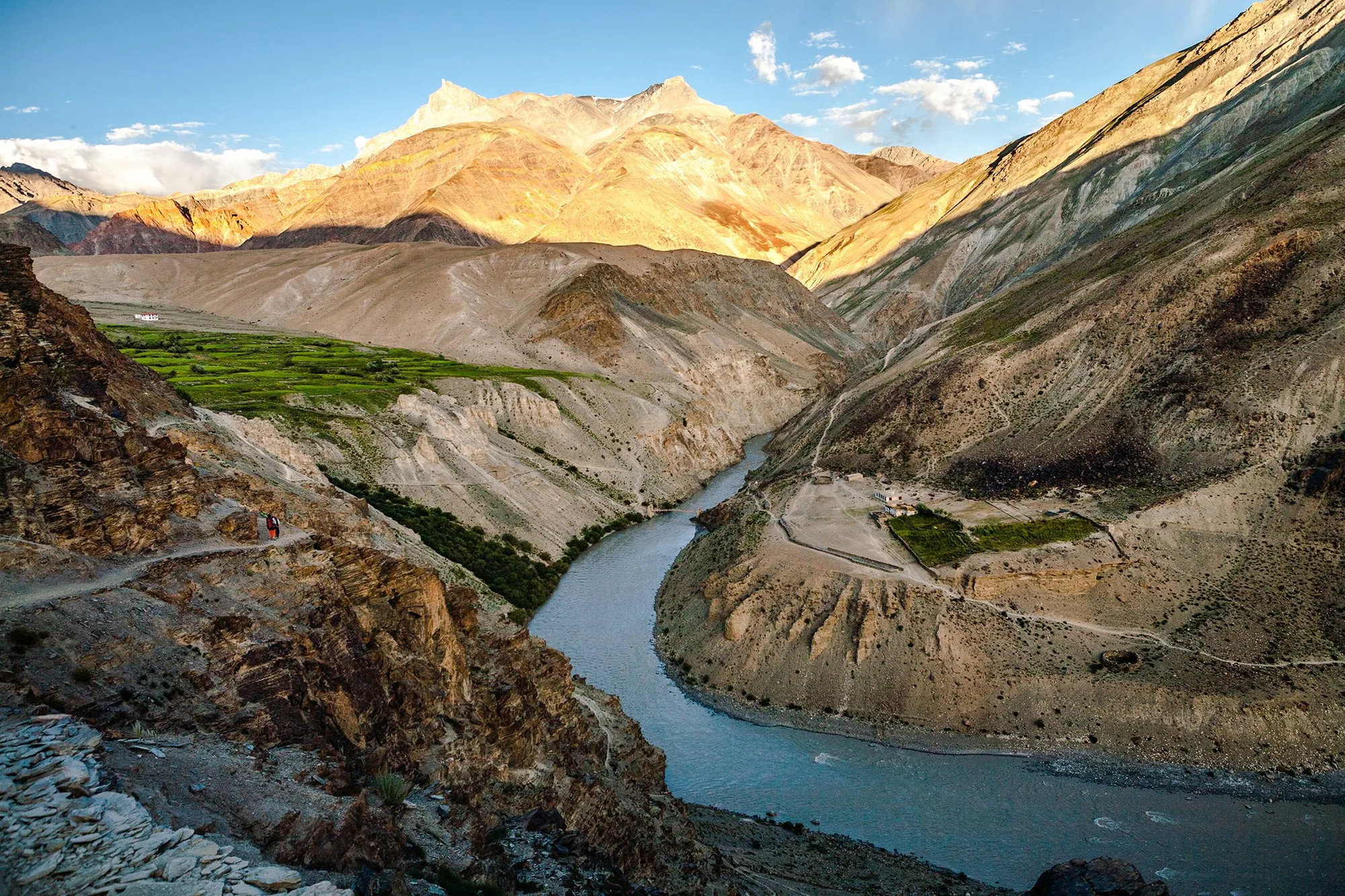
The trail is a classic gorge walk. It is generally well-defined and flat, but it features several sections cut directly into the scree-slopes of the gorge, requiring careful footing.
Summit Day Notes
There is no 'summit', but the arrival at the monastery requires climbing a steep set of stairs from the riverbed up to the cave complex.
The Descent
N/A. The trail is mostly undulating.
Altitude Profile
Very flat. You stay between 11,800 ft and 12,630 ft the entire time.
Run AMS Risk Audit →Trail Performance Data
Max Gradient
25%
Hydration
0.5L per km recommended
Loose Surface Sections
- •Final climb to the monastery doors
Personal Readiness
Am I ready?
What this route demands
People who feel comfortable on this route can usually:
Who Can Do This Trek?
Min Age
10+
Max Age
65
Western Toilets at Base
Yes
Solo Female Travelers
Zanskar is incredibly safe culturally. The homestay network makes it very easy and safe for solo female travelers.
Hazard Profile
What goes wrong?
Common Mistakes on Phugtal Monastery Trek
Most injuries and failures on this trail can be avoided by making smarter decisions early on.
Not arranging for a return taxi in advance. There is no phone network at the roadhead to call for a cab.
Underestimating the sun. The UV reflection off the white limestone cliffs is intense.
Attempting to walk the entire motorable road from Padum to Purne to 'save money' on a taxi. It is a terrible, dusty, 45km walk.
Safety & Medical Risks
Key Risks
Heat exhaustion and dehydration in the gorge
Minor rockfall from the cliffs above
Slips on the narrow cliffside trail
AMS (Altitude Sickness)
Because the trek starts and ends at roughly the same altitude as Padum, AMS is rare *if* you have already acclimatized in Padum for a day or two.
Evacuation Route
Evacuate back to the roadhead at Cha/Anmu. From there, it is a 2-hour drive to the hospital in Padum.
Solo Trekking
Very safe for solo trekkers. The trail is obvious, homestays are welcoming, and you will likely see other trekkers on the path.
Common Trail Ailments
🏥 Nearest ICU: Leh SNM Hospital (2 days away by road)
Tactical Emergency Hub
> The proximity to the expanding road network makes this one of the easier Zanskar treks to evacuate from.
Auditability
How is this calculated?
Before attempting this route:
Still deciding?
Compare routes side-by-side to find the perfect match for your fitness, dates, and budget.
Still think it's doable? Share this with your trek mate and see if they agree.
Step 2: Seasonal Safety
You know how demanding this route is.
Now find the safest and most reliable season to attempt it.
Check Best Time to Go