Compare operators for Vidya Peak (Pt 5000) Expedition
8 Days16,404ft maxUttarakhandModerate
No operators listed yet
Interested in this expedition?
We are currently vetting local partners for Vidya Peak (Pt 5000) Expedition to ensure the highest safety standards. Be the first to know when it's open for booking.
Are you a local operator?
Join our platform to list your verified packages for Vidya Peak (Pt 5000) Expedition and reach thousands of climbers directly.
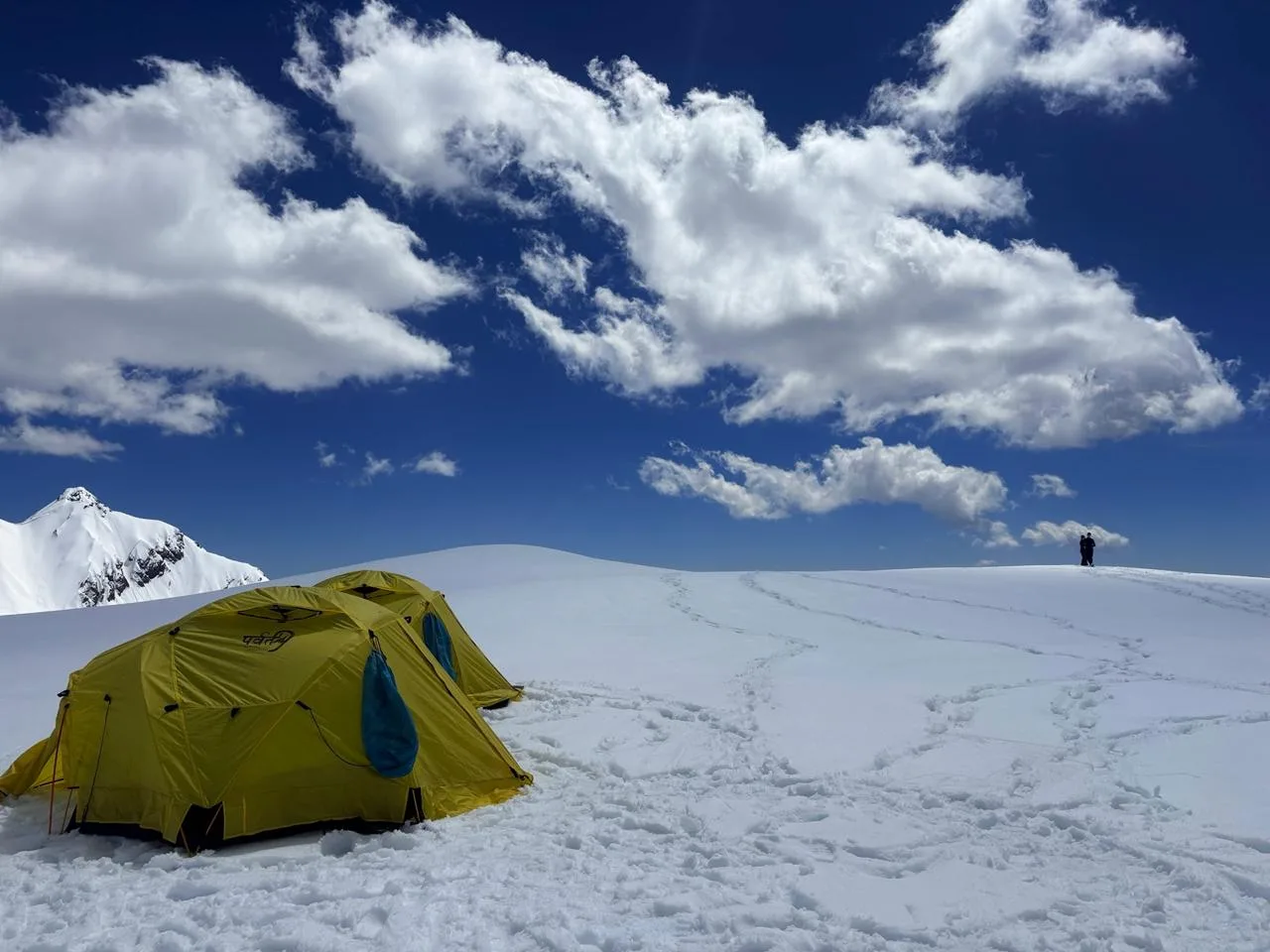
Vidya Peak / Point 5000 (5,000m) is a non-technical climbing peak located in the Gangotri sanctuary. It is an excellent objective for trekkers looking to climb their first Himalayan summit without needing heavy technical mountaineering equipment. The route starts from Gangotri and passes through Chirbasa and Bhojbasa, before establishing a base camp. The climb features moraine trails and a final snow slope of 30-35 degrees, making it highly accessible yet physically demanding due to the thin air.
Expedition Highlights
Bhagirathi Group View
Incredible panoramic views of Bhagirathi I, II, and III peaks rising across the valley.
Gangotri Temple
Sacred temple dedicated to Goddess Ganga at the trek starting point.
Bhagirathi River Source
Gaumukh snout, the source of the holy Ganges river, visible from high camp.
What is the overall climbing difficulty grade of Vidya Peak / Pt 5000 Expedition?
The climbing grade of Vidya Peak / Pt 5000 Expedition is classified as F / PD. This means it involves moderate glacier travel, simple snow slopes, and low-angle scree requiring basic crampon and ice axe usage.
Are there any mandatory physical or trekking prerequisites for the Vidya Peak / Pt 5000 Expedition expedition?
Yes. We recommend a history of high-altitude treks above 15,000ft (like Roopkund or Goechala) and a high level of cardiovascular fitness (10km run under 55 minutes).
Is an IMF peak permit and Liaison Officer required for Vidya Peak / Pt 5000 Expedition?
Yes. All peaks in India require booking through the Indian Mountaineering Foundation (IMF). For Vidya Peak / Pt 5000 Expedition (5000m), an IMF peak permit is required, but a Liaison Officer is generally not mandated unless requested by the IMF for international teams.
What is the best season to attempt the Vidya Peak / Pt 5000 Expedition expedition?
There are two windows: Pre-monsoon (May to June) and Post-monsoon (September to October). Pre-monsoon has more consolidated snow bridging crevasses, while post-monsoon offers extremely clear weather but colder temperatures.
What is the technical crux of the standard route on Vidya Peak / Pt 5000 Expedition?
The standard route via North Slope Standard Route features its main crux at the steep snow ridge and bergschrund crossing above Vidya Peak High Camp at 15420ft.
What camp progression is established on the Vidya Peak / Pt 5000 Expedition expedition?
The progression starts at the base village Gangotri (10170ft). We set up Vidya Peak Base Camp at 13780ft, followed by Vidya Peak High Camp at 15420ft. The summit push is launched directly from the High Camp.
What boots are mandatory for this expedition?
For Vidya Peak / Pt 5000 Expedition, B2 or B3 stiff-soled mountaineering boots are required. Single leather boots are acceptable if they have high insulation ratings, but double boots are recommended for early summer or late autumn departures.
Where is the nearest medical emergency facility and evacuation route for Vidya Peak / Pt 5000 Expedition?
Evacuation is via Trek down to Gangotri village, drive to Uttarkashi Hospital.. The nearest hospital is located in Uttarkashi (District Hospital) or Joshimath (Army/Civil Hospital), which has facilities for treating acute mountain sickness (AMS) and traumatic injuries.
How do we source water during the expedition camps?
At Vidya Peak Base Camp, water is sourced directly from glacial meltwater streams using filtration. At higher camps like Vidya Peak High Camp, all running water is frozen, requiring team members to collect clean snow and melt it using high-altitude multi-fuel stoves.
What is the acclimatization rotation schedule for this climb?
We follow the "climb high, sleep low" rule. Climbers will perform a load ferry from Vidya Peak Base Camp to Vidya Peak High Camp, caching gear, and return to sleep at the lower camp. This triggers red blood cell production before moving up permanently.
Is satellite communication available during the expedition?
Satellite phones (like Thuraya or Iridium) are restricted in India. However, the expedition leader carries an authorized satellite communicator (like Garmin inReach) for weather reports and emergency SOS signals, registered with local authorities.
Where is the last ATM and cellular network location?
The last ATM and cellular connectivity is at Gangotri or the nearest highway town. Once we trek past the road head, there is zero mobile signal, and satellite/VHF radios are the only forms of communication.
What is the local cultural significance of Vidya Peak / Pt 5000 Expedition?
Named in honor of "Vidya" (knowledge) as it serves as a training ground for climbing academies.
What is the estimated success rate for summits on Vidya Peak / Pt 5000 Expedition?
The average success rate is approximately 70%. Success depends heavily on weather windows, team physical preparation, and individual acclimatization.
What high-altitude emergency medicines are carried?
The medical kit contains Diamox (acetazolamide) for AMS, Dexamethasone for HACE (High Altitude Cerebral Edema), and Nifedipine for HAPE (High Altitude Pulmonary Edema). Oxygen cylinders are kept at Base Camp and High Camp for emergencies.
What is the overall climbing difficulty grade of Vidya Peak / Pt 5000 Expedition?
The climbing grade of Vidya Peak / Pt 5000 Expedition is classified as F / PD. This means it involves moderate glacier travel, simple snow slopes, and low-angle scree requiring basic crampon and ice axe usage.
Are there any mandatory physical or trekking prerequisites for the Vidya Peak / Pt 5000 Expedition expedition?
Yes. We recommend a history of high-altitude treks above 15,000ft (like Roopkund or Goechala) and a high level of cardiovascular fitness (10km run under 55 minutes).
Is an IMF peak permit and Liaison Officer required for Vidya Peak / Pt 5000 Expedition?
Yes. All peaks in India require booking through the Indian Mountaineering Foundation (IMF). For Vidya Peak / Pt 5000 Expedition (5000m), an IMF peak permit is required, but a Liaison Officer is generally not mandated unless requested by the IMF for international teams.
What is the best season to attempt the Vidya Peak / Pt 5000 Expedition expedition?
There are two windows: Pre-monsoon (May to June) and Post-monsoon (September to October). Pre-monsoon has more consolidated snow bridging crevasses, while post-monsoon offers extremely clear weather but colder temperatures.
What is the technical crux of the standard route on Vidya Peak / Pt 5000 Expedition?
The standard route via North Slope Standard Route features its main crux at the steep snow ridge and bergschrund crossing above Vidya Peak High Camp at 15420ft.
What camp progression is established on the Vidya Peak / Pt 5000 Expedition expedition?
The progression starts at the base village Gangotri (10170ft). We set up Vidya Peak Base Camp at 13780ft, followed by Vidya Peak High Camp at 15420ft. The summit push is launched directly from the High Camp.
What boots are mandatory for this expedition?
For Vidya Peak / Pt 5000 Expedition, B2 or B3 stiff-soled mountaineering boots are required. Single leather boots are acceptable if they have high insulation ratings, but double boots are recommended for early summer or late autumn departures.
Where is the nearest medical emergency facility and evacuation route for Vidya Peak / Pt 5000 Expedition?
Evacuation is via Trek down to Gangotri village, drive to Uttarkashi Hospital.. The nearest hospital is located in Uttarkashi (District Hospital) or Joshimath (Army/Civil Hospital), which has facilities for treating acute mountain sickness (AMS) and traumatic injuries.
How do we source water during the expedition camps?
At Vidya Peak Base Camp, water is sourced directly from glacial meltwater streams using filtration. At higher camps like Vidya Peak High Camp, all running water is frozen, requiring team members to collect clean snow and melt it using high-altitude multi-fuel stoves.
What is the acclimatization rotation schedule for this climb?
We follow the "climb high, sleep low" rule. Climbers will perform a load ferry from Vidya Peak Base Camp to Vidya Peak High Camp, caching gear, and return to sleep at the lower camp. This triggers red blood cell production before moving up permanently.
Is satellite communication available during the expedition?
Satellite phones (like Thuraya or Iridium) are restricted in India. However, the expedition leader carries an authorized satellite communicator (like Garmin inReach) for weather reports and emergency SOS signals, registered with local authorities.
Where is the last ATM and cellular network location?
The last ATM and cellular connectivity is at Gangotri or the nearest highway town. Once we trek past the road head, there is zero mobile signal, and satellite/VHF radios are the only forms of communication.
What is the local cultural significance of Vidya Peak / Pt 5000 Expedition?
Named in honor of "Vidya" (knowledge) as it serves as a training ground for climbing academies.
What is the estimated success rate for summits on Vidya Peak / Pt 5000 Expedition?
The average success rate is approximately 70%. Success depends heavily on weather windows, team physical preparation, and individual acclimatization.
What high-altitude emergency medicines are carried?
The medical kit contains Diamox (acetazolamide) for AMS, Dexamethasone for HACE (High Altitude Cerebral Edema), and Nifedipine for HAPE (High Altitude Pulmonary Edema). Oxygen cylinders are kept at Base Camp and High Camp for emergencies.
Are you a local operator?
Join our platform to list your verified packages for this expedition.