
Why Mountain Readiness Is More Complex Than a Fitness Score
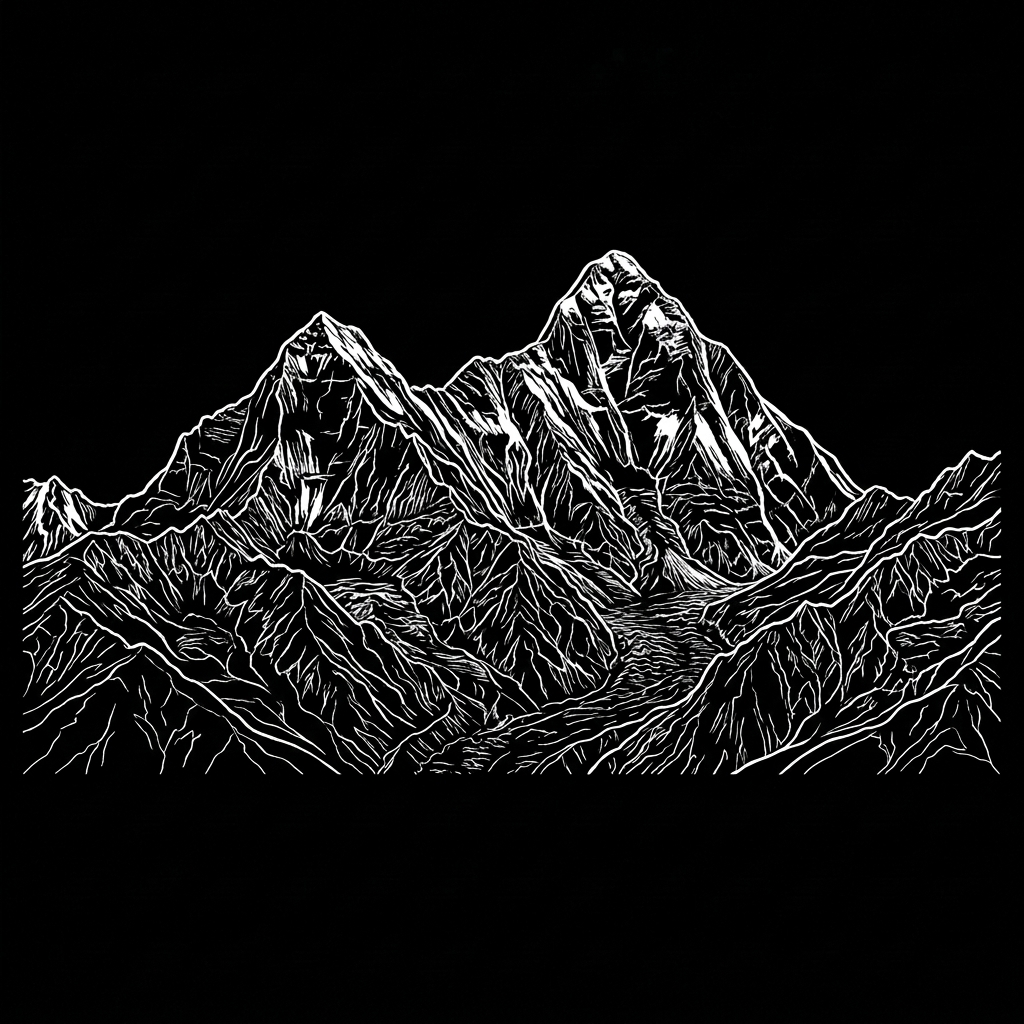
The Marathoner vs. The Mountain Veteran
One runs marathons at sea level — strong cardiovascular numbers, trains regularly, but has never slept above 3,000 metres. The other is slower, older, and less athletic by conventional measures, but has spent years moving carefully through high-altitude terrain, reading weather, managing effort, and recovering in tents.
Which one is more mountain ready?
In the Himalayas, the answer is often less obvious than people expect.
Controlled Performance vs. Accumulated Stress
Mountains are not controlled environments.
A treadmill does not accumulate fatigue; a mountain does. Each day on a high route adds to a growing debt of altitude, structural impact, cold exposure, sleep disruption, and nutritional deficit. By day four or five, a trekker is not the same physiological system they were at the trailhead. Mountains test adaptation under accumulated stress. That is a fundamentally different demand than a single-session fitness benchmark.
Mountains Are Probabilistic Systems
The same person may perform very differently on different mountains, at different altitudes, under different accumulated fatigue states. There is no formula that eliminates this uncertainty. A mountain readiness system should therefore estimate likelihoods, not promise outcomes. The moment a system presents a precise score as a guarantee, it has misrepresented what mountains actually are.
Probability is not weakness in a readiness model. It is honesty.
The Reality of Route-Specific Demands
Kedarkantha demands an aerobic base and cold tolerance. Roopkund adds altitude exposure and multi-day recovery. Auden's Col introduces technical terrain, glacier travel, extreme remoteness, and a recovery debt that accumulates over two weeks of high-output days above 4,000 metres. Fitness is not a single number that applies uniformly to all routes. It is a profile, and a route has a profile too. Readiness is what happens when those two profiles meet.
Route-specific readiness is not a feature — it is the correct way to think about preparation.
How Experience Physically Changes Physiology
Beyond physiology, experience changes movement. An experienced mountain person conserves energy instinctively. They pace themselves before they feel the need to, read terrain to choose the easier line, and know exactly when to stop. They eat before hunger and drink before thirst. A highly athletic person at altitude may still be physiologically uncertain, working harder than they realise and spending reserves faster than the mountain will return them. An average but experienced high-altitude trekker may adapt far better, because they have learned to move with the mountain rather than against it. That gap is real. It deserves to be part of how readiness is assessed.
Nonlinear Risks: How Weaknesses Multiply
In the mountains, weaknesses multiply rather than add.
A person carrying two moderate risk factors may not face twice the difficulty — they may face four times. This is why honest risk assessment requires looking at the interaction between factors, not just their individual presence.
The "Invisible" Deficit: The Road to the Trailhead
Most Himalayan base villages are 8 to 12 hours from the nearest city, along winding mountain roads with continuous elevation changes and sharp lateral movement. For someone prone to motion sickness, this journey alone can mean arriving dehydrated, nauseated, and unable to eat a proper meal before the first day of trekking even starts.
It is a small thing. But a person who starts a trek in a physical deficit — before the altitude has had any effect — is already working with significantly less margin. We think that deserves to be acknowledged, even if no scoring system can fully account for it.
Why We Built MountRoutes Differently
The readiness system on MountRoutes is probabilistic. It matches a user's physiological profile against the specific demands of a specific route — accounting for altitude burden, terrain grade, fatigue accumulation, structural load on descents, and altitude exposure history. It weighs its estimates by the quality of the evidence it has — distinguishing between what a person has observed about themselves and what they are guessing.
Where evidence is incomplete, it says so. Where a risk factor interacts with a route's demands in a meaningful way, it explains why. It does not produce a number and call it settled. We also try to account for things most systems ignore entirely, like the road to the base village. Preparation may shape most of the outcome, but mountains still contain uncertainty. A responsible readiness system should acknowledge both — not because uncertainty is comfortable, but because pretending otherwise does not serve the person standing at the trailhead.
Mountains do not care about confidence scores. They respond to preparation, adaptation, pacing, judgment, recovery, terrain, weather, and sometimes the particular way a person's physiology reacts to altitude on that specific day. We believe mountain readiness should reflect that complexity — not simplify it away.
Altitude & Adaptation: The Deep Dive
Why does an outstanding sea-level fitness score not prevent altitude sickness (AMS)?
Sea-level fitness measures your heart and muscles under normal atmospheric pressure. Altitude acclimatization is a separate physiological response controlled by blood pH levels, hyperventilation management, and pulmonary pressure. Fit marathoners can still experience AMS if their bodies are genetically or physiologically slow to produce extra red blood cells and adapt to the 40% reduction in oxygen density at 4,500m.
What makes mountain risk "non-linear" rather than additive?
In a stable environment, two minor issues (like mild knee soreness and a poor night of sleep) simply add up. But in the mountains, they multiply. A sore knee forces you to alter your gait, which speeds up muscular fatigue on a steep descent. When combined with sleep deprivation, your spatial awareness declines, leading to slips or joint stress. Minor weaknesses interact with high altitude, cold, and weight-carrying to turn simple issues into emergency situations.
How does altitude experience change the way a trekker physically expends energy?
High-altitude veterans move with instinctive efficiency. They adopt the rhythmic "mountain pace" (slow, steady, synchronized breathing), which prevents spikes in heart rate. They read the trail to choose lines of least resistance, eat before hunger, and hydrate before thirst. While a highly conditioned athlete might power through slopes using raw cardiac reserve (depleting their muscles rapidly in thin air), an experienced trekker conserves every ounce of energy, adapting far better over multi-day itineraries.
Compare Operators
Explore Top Himalayan Routes
View Comparison →Related Guides
Want to understand how we compare operators? Learn about our methodology
Spread the wisdom of high-altitude preparation
Get the Latest Trek & Yatra Stories
In-depth guides, operator reviews, and trekking tips — straight to your inbox.
No spam. Only useful updates.